
Smart Factory Transformation with the Internet of Things
In manufacturing, optimization is essential for long-term success and competitiveness. With recent advances in technology, many companies are exploring how the Internet of Things (IoT) can help them develop smarter operations, increase efficiency, and improve production output.
To meet today’s demands for fast delivery and consistent quality, manufacturers are increasingly adopting connected technologies. These technologies enable them to create smarter and more efficient facilities while maintaining their competitive position in the market.
What Is a Smart Factory?
A smart factory is a manufacturing facility that continuously collects and shares data through connected machines, devices, and production systems.
In a smart factory, physical manufacturing processes and operations are integrated with digital technologies, intelligent computing, and big data. This integration creates a more responsive and data-driven environment for companies focused on manufacturing and supply chain management.
Smart factories are a key component of Industry 4.0, a new phase of the Industrial Revolution that places a strong emphasis on real-time production data, embedded sensors, connectivity, automation, and machine learning.
Levels of Smart Factory Development
Smart factory transformation can be implemented at different levels. The main levels of smart factory development include:
- Data collection
- Data analysis
- Predictive analysis
- Recommended actions and solutions
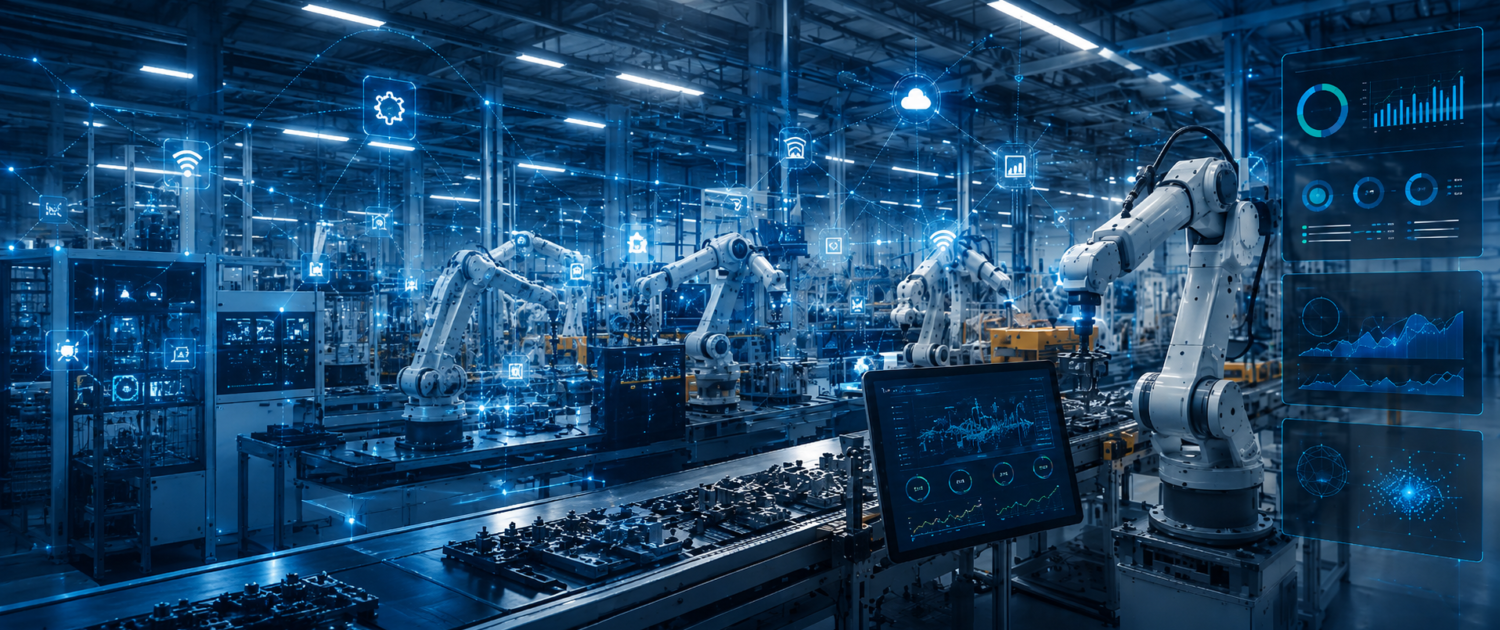
Benefits of Implementing Fanavar Fartak Espadana’s Intelligent Systems in Manufacturing Facilities
Fanavar Fartak Espadana’s intelligent systems provide manufacturers with integrated data collection, monitoring, analysis, and reporting capabilities. These solutions support more informed decision-making and continuous improvement across manufacturing operations.
Key benefits and capabilities include:
- Comprehensive data collection and monitoring of production automation systems
- Integration of operational data into a unified software platform
- Continuous data updates and detailed event logging
- Statistical data analysis and comprehensive reporting
- Monitoring and calculation of management and performance indicators
- Visualization of performance indicators through graphical dashboards and charts
- Actionable recommendations for process improvement
- Improved product quality
- Increased operational efficiency and productivity
 Phone :
  Phone :
  Email :