The First Industrial Revolution: Steam Power
The First Industrial Revolution took place between the late eighteenth and early nineteenth centuries.
During this period, production evolved from manual labor performed by people and assisted by working animals to more efficient forms of production powered by water, steam engines, and various types of machine tools.
The Second Industrial Revolution: Electricity
The introduction of steel and the use of electricity in factories marked the beginning of the Second Industrial Revolution.
Electricity enabled manufacturers to increase productivity and improve the operation and flexibility of factory machinery. During this period, mass-production concepts such as the assembly line were introduced as a means of increasing manufacturing efficiency.
The Third Industrial Revolution: The Digital Revolution
Beginning in the late 1950s, the Third Industrial Revolution gradually emerged as manufacturers started incorporating electronic and, eventually, computer-based technologies into their factories.
During this period, manufacturing shifted away from a primary reliance on analog and mechanical technologies toward digital technologies and automation software.
The Fourth Industrial Revolution: The Internet of Things
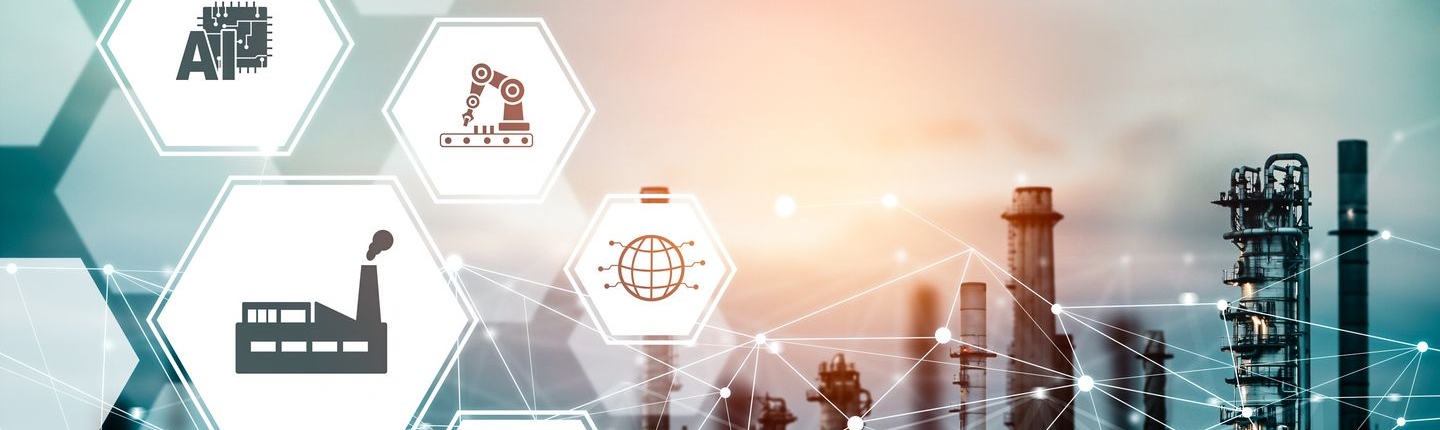
Over the past few decades, the Fourth Industrial Revolution, commonly known as Industry 4.0, has emerged.
The Fourth Industrial Revolution takes the emphasis on digital technology established during previous decades to an entirely new level through Internet of Things connectivity, access to real-time data, and the introduction of cyber-physical systems.
Industry 4.0 provides a more comprehensive, connected, and integrated approach to manufacturing. It connects the physical and digital worlds and enables improved collaboration and access to information across departments, partners, suppliers, products, and people.
These technologies enable business owners to better understand and control different aspects of their operations. They can use real-time data to increase productivity, improve processes, and support business growth.

 Phone :
  Phone :
  Email :