
AI-Based Pharmaceutical Vial Inspection System
Automated Inspection of Pharmaceutical Vials Using Artificial Intelligence and Machine Vision
In pharmaceutical production lines, accurate vial inspection and verification of the product’s appearance, printing, and packaging are highly important. Manual or sampling-based inspection may allow some defective products to pass through the quality control process.
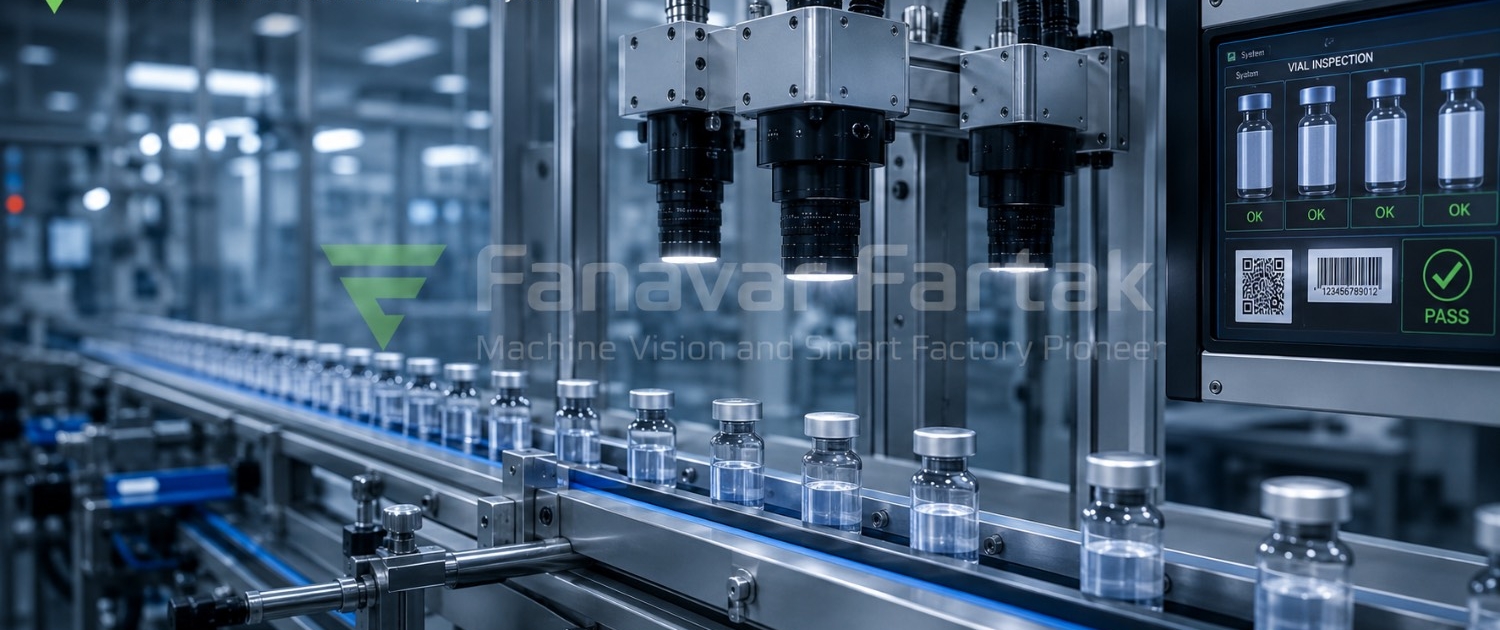
Fanavar Fartak Espadana’s intelligent vial inspection system uses machine vision, artificial intelligence, and image processing to enable automated product inspection directly on the production line.
The Problem
High production-line speeds and the visual similarity of products make the manual inspection of every vial difficult. Visual defects, printing problems, improper positioning of product components, or incorrect information can affect the quality of the final product.
Fanavar Fartak Espadana’s Solution
Using industrial cameras and image processing algorithms, the system captures and analyzes images of vials passing through the production line.
The required product information and characteristics are compared against predefined criteria. If a nonconformity is detected, the defective product can be identified and separated from the production line.
System Capabilities
- Automated vial inspection on the production line
- Inspection of the product’s visual characteristics
- Verification of the accuracy and quality of printed information
- Inspection of label position and condition
- Detection of product nonconformities against the reference sample
- Identification of defective products
- Recording of quality control results
- Integration with production lines and rejection systems
Technologies Used
- Artificial Intelligence (AI)
- Industrial Machine Vision
- Image Processing
- Optical Character Recognition (OCR)
- Industrial Imaging and Illumination
Target Customers and Market
- Pharmaceutical companies
- Pharmaceutical vial manufacturers
- Manufacturers of injectable pharmaceutical products
- Pharmaceutical production and packaging lines
 Phone :
  Phone :
  Email :