
Project Overview: Quality Control
Quality Control for Continuously Cast Steel
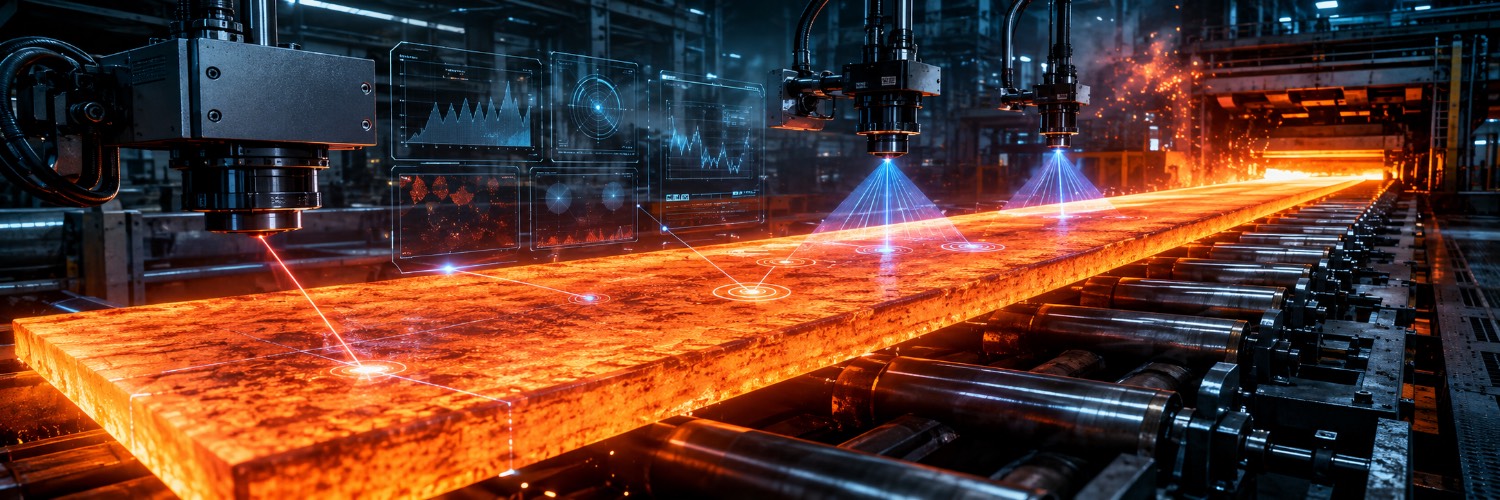
Accurate, non-contact defect detection is one of the primary objectives of this steel quality control project. The proposed solution uses non-contact laser and imaging sensors, which offer the precision and inspection capabilities required to evaluate surface defects without physically touching the steel product.
These technologies are particularly suitable for demanding industrial environments, including continuous casting operations and hot rolling mills. The system is designed to detect, identify, and classify surface defects, supporting improved quality control and higher final-product quality.
The Importance of Steel Surface Defect Detection
Surface defect detection is a critical part of evaluating the quality of steel products. The condition of the steel surface can affect the performance, reliability, and suitability of the final product for its intended application.
Advances in technology have transformed surface inspection from conventional manual methods into automated processes powered by artificial intelligence and machine learning algorithms. In particular, deep learning algorithms have significantly expanded the capabilities of automated systems for detecting and classifying surface defects.
Technical Requirements and Project Scope
Due to the number of production lines and machines involved in steel manufacturing, two complete defect detection and data acquisition packages must be installed on each machine.
Each package includes the following components:
Illumination and Reflected-Signal Detection Equipment
This equipment uses advanced laser and imaging sensors to inspect the steel surface and detect surface defects. It provides the illumination and signal acquisition capabilities required for the inspection process.
Cooling System
Reliable cooling systems are installed to maintain the operating conditions, performance, and measurement accuracy of the equipment in high-temperature environments.
Processing Hardware and Software
High-performance processing hardware and specialized software are used to analyze the acquired data and run machine learning and deep learning algorithms.
Key Project Benefits
Accurate Defect Detection
Using advanced sensing and data-processing technologies, the system can detect and classify steel surface defects with a high level of accuracy.
Improved Production-Line Efficiency
Detecting quality issues at an early stage helps prevent defective products from progressing through subsequent production stages and reduces production waste.
Reduced Human Error
Automated inspection reduces potential errors and inconsistencies associated with manual inspection, enabling more reliable and efficient quality control.
Improved Production Reliability and Consistency
The use of supervised and unsupervised learning algorithms can enhance the accuracy and consistency of the defect detection process.
Advancing Automated Quality Control in Steel Production
This project applies artificial intelligence and machine learning technologies to optimize steel production and improve final-product quality. By automating surface inspection and identifying defects during production, the system supports more efficient manufacturing operations and more consistent quality control.
 Phone :
  Phone :
  Email :